
Discover how encouraging your child’s special interests can lead to more successful communication among the whole family.
As professionals in the field, one of the most frequently asked questions we receive is how to increase communication with children diagnosed with autism or related conditions. Although there is no “one size fits all ” approach, there are definitely some recipes that will increase speech and communication in all children,no matter the diagnosis.
From working with autistic adults, Speech Therapists, and Occupational therapists, we have noticed there are a few strategies that almost always work with our children. Not just to increase communication, but to support them to decrease their anxiety, increase coping skills, and encourage them to be more socially active. Any child, or person, flourishes when he or she feels comfortable and confident.
How do we ensure our child becomes more confident on a daily basis? We increase our focus on their interests and likes. What most professionals would call “obsessions” can actually become a career path for our children. We want to encourage and expand on these interests, in a fun and motivating way.
Okay, got it, but how do we do this?
First, let’s look at the common concepts that probably lead to an autism diagnosis for your child: his or her sensory needs, communication challenges, social difficulties, and potentially, behavioral challenges. How could we combine all of these with an interest-based activity and work on increasing communication? It might be simpler than you expect, let’s try and work on a case study together:
Dylan is five years old and loves dinosaurs. He can look at his dinosaur figurines for hours and will pack these out in a very straight line. Dylan doesn’t like to share his toys with his younger brother, Steve.
This might be due to Steve’s age and clumsiness. Like when he knocks over a dinosaur (or two!) in the process of wanting to grab another one.
Dylan says only a few words,mainly “no”, “more” and “open”. He goes to a therapy center where he has a 1:1 therapist that works on repetitive lessons to increase speech production. When he verbalizes a sound or chains a few sounds together, he receives one of his favorite dinosaurs for a short period of time.
This short blurb about Dylan provides various ideas for how to connect with him. We know he likes dinosaurs, so we know what his main interest is.
This is important, and it is always the first thing we want to establish. It is the easiest way to increase communication and expand on a child’s interests. We also know he is “working for” his interest at his current therapy center, which, contrary to popular belief, will decrease his motivation to communicate spontaneously.
It will potentially help him “comply” more during a lesson, in order to receive his reinforcer, but the spontaneity and motivation won’t be enticed. We want to work on spontaneous communication in a fun manner.
We can create our own dinosaurs with Dylan—there are plenty of online videos to create clay figurines, which we can research with Dylan. We can ask him to choose which ones he wants to make and what color he needs to paint them. We may ask him to help get the clay from the shops, choose the size of it, and pay for all the items for this activity.
Once he is home, we’ll ask him to label what he needs first from the child-friendly steps we printed (or created). Add some visuals in the steps and always keep it interest-based with a few dinosaur stickers to play with in between. The goal of this activity is not to wait for Dylan to speak, but to entice him with his interests to want to communicate and share.
You might be surprised how quickly we hear some sounds and words being imitated. We remember to include lots of pairing, where we pair a sound with a fun activity. For example, if we squish the clay, we can say “sh sh sh” for “squish”. We can then give him some of the clay to squish and make the same sound. Patience is key during these activities as we want Dylan to see that we are there to spend some time with him, with no expectations other than having fun together.
Dylan’s younger brother, Steve, can perhaps create his own clay figurines. Sharing is indeed caring, but at that age, it is important to provide a child with autonomy and a sense of belonging—which items belong to him and which belong to his brother. This won’t always be the case, and working on sharing is definitely important, but communicating his needs, sharing in moments, and taking turns are prerequisites for sharing favorite items.
Another tip is to take photos of the entire process. We usually take photos and videos and create a short TikTok or Instagram video, which is easy to edit and download. These videos then create another opportunity for us to work on communication, as most children love watching their own creations.
Here, we can use pairing again and add a few comments when we watch the video together to encourage spontaneous communication. We could ask Dylan to show his dad or another family member what he made and the video we created. These are all opportunities to encourage more communication and collaboration.
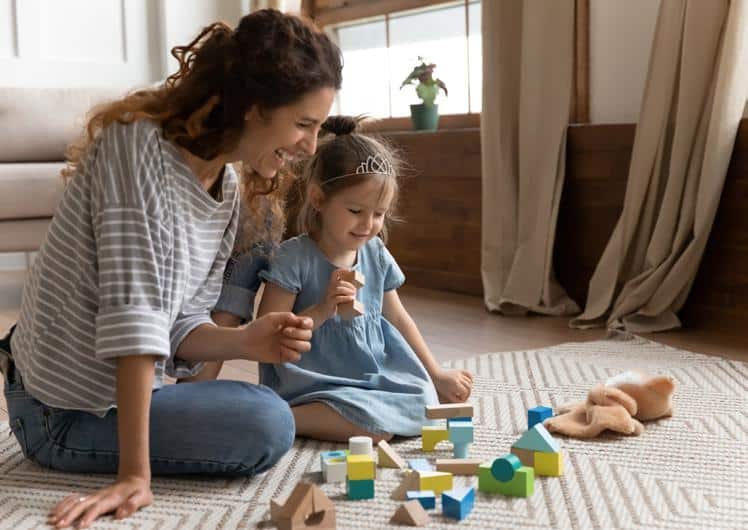
How to expand on interests and communication
When we had an interview with Dr. Temple Grandin, she mentioned that if her mom hadn’t encouraged her to focus on her interests, she would probably still be limited in her verbal abilities. It was only when she attended classes that she enjoyed that she started communicating and becoming confident in doing so.
When working with your child, the first step is to observe them for a while and determine what their interests are. Then, create a few fun activities as mentioned above and show genuine interest in their interests, without having expectations.
The aim is to build a very trusting relationship with our children. Once we have worked on this, we can slowly increase some of the expectations and provide guidance in expanding their interests and additionally, their communication skills.
It’s always a good idea to speak with a Speech and Language Pathologist who specializes in autism and related conditions. They will have a better idea of your child’s specific needs and developmental age, as there is no “one size fits all” when it comes to any individual.
For the most part, if you are able to work on interest-based activities, you can easily find ways to systematically expose your child to more activities that are in line with their current interests.
Using Dylan as our case study again (concentrating on his interest in his figurine dinosaurs), we can expand it with the clay activity we worked on. We can also see if there are any museums in our area to take him to. This will provide another opportunity to prepare him for an outing, getting him involved in the research of the outing, what to wear, what to take with him, and finally, what to expect.
In our Intensive Parenting Course, we speak of the importance of “prep talks instead of pep talks”, which makes all the difference for setting our children up for success before an actual outing. It’s always important to document the outing (for some added communication opportunities).
Keep your child’s sensory needs in mind, which can be discussed with an Occupational Therapist who specializes in sensory integration therapy. You might want to bring a few fidget toys and noise-canceling headphones for busy areas.
Outings are great to generalize and expand on interests. It will provide opportunities to point at different items in the museum, to socialize with others, to pay for tickets, and to work on independence.
Give yourself the credit that is due—you are going above and beyond to support your child. If you don’t feel like going on an outing, it is okay to postpone it till you have the energy for it.
Remember, if you are not fully present in the moment, it will be extremely difficult for your child not to model this lack of energy. If there is anything I would like you to take from this article, it is to keep expectations of verbal communication low. This will increase the probability of an increase in communication.
Have fun. We can’t wait to hear which activities you completed together!
Trending Products

SENSORY4U Weighted Lap Pad for Kids...

HunnmingRe Weighted Lap Blanket 7lb...

Kivik Weighted Blanket 3lbs, Blue D...

anfie Weighted Blanket Kids (36R...

Kidaddle 5lb Weighted Blanket (Grey...

HOSUKKO Weighted Blanket – 5 ...

yescool Weighted Blanket 5 Pounds C...

5lb Child’s Weighted Blanket ...

MAXTID Weighted Blanket for Kids 5l...