
An integrative pediatrician shares ideas for helping children with sensory-seeking needs.
Many kids on the autism spectrum have a unique way of processing sensory input. Some seem to have an inward amplifier of sounds, tastes, textures, visual information, and other sensory cues. These kids are referred to as “sensory sensitive.”
Others seem to have an inward damper and continually seek a more pronounced experience. These kids are considered “sensory seeking.” When ASD is compounded by other conditions, such as anxiety or ADHD, sensory processing issues can be even more prevalent.
Kids with autism may have a combination of hypersensitivity (over-responsiveness) or hyposensitivity (under-responsiveness) toward different types of sensory input. Each child has a unique “fingerprint” of how they filter various types of stimuli. They may be more or less sensitive to:
- Sight
- Sound
- Smell
- Taste
- Touch
- Vestibular/Balance (movement sense)
- Proprioception (awareness of body position in space)
- Interoception (awareness of body cues such as pain, temperature, hunger, or need to use the bathroom)
Clues your child may be hyposensitive or sensory seeking
Sight
Your child may stare at lights or moving objects. They may enjoy visually “busy” places and be drawn to high-action programs or video games.
Sound
Your child may enjoy listening to music (perhaps at high volumes) and prefer background noise to silence. They may experiment with or make sounds.
Taste and smell
Your child may enjoy intensely flavored food (spicy, sour, salty, sweet, or bitter) and be willing to taste new things (even non-food items). They may seek out smells or seem oblivious to them (pleasant or unpleasant).
Touch
Your child may be particularly cuddly or have issues respecting others’ space. They may need reminders to keep their hands to themselves. They may enjoy getting “messy” and be drawn to textures.
Vestibular/Balance
Your child may enjoy riding in a car or other vehicle, or enjoy riding on moving equipment such as swings or escalators. They may enjoy spinning, climbing, and going upside down.
Proprioception
Your child may enjoy roughhousing and high-risk/high-thrill activities. They may have a tendency to get in trouble for pushing or banging into others. They may be considered clumsy or uncoordinated in large motor and fine motor tasks.
Interoception
Your child may have a hard time discerning their emotions, receiving hunger cues, or knowing when they need to go to the bathroom. Your child may resist dressing for the weather or may seem to have a very “high pain tolerance.”

The challenge for parents of sensory-seeking kids is to meet kids where they are, while still promoting healthy, prosocial behavior. When our kids are louder, more hands-on, or more physically active than others, they can cause disruption or push others away. This can be one of the most difficult things to experience as a parent of a neurodivergent child. We may experience embarrassment, sadness, or shame watching our kids be excluded or isolated from the group. We can seek out supportive environments and also be strategic in dealing with our child’s sensory-seeking tendencies.
One strategy is to meet the sensory need in a substituted, more socially acceptable way. For example, if a child tends to chew on their clothes, they can be given gum or a “chewy” necklace specifically designed for chewing.
If a child flaps their hands, they can experiment with substituting this action with a smaller, more contained motion. The goal is not to ignore the sensory need, but to address it in a productive way.
Another strategy is to take breaks during which a sensory need can be satisfied. For example, kids who thrive on active, physical play demonstrate improved focus and benefit academically when they have opportunities for quality outdoor recess. When space or outdoor access is limited, tools like mini-trampolines, jumperoos, or indoor play equipment can be useful.
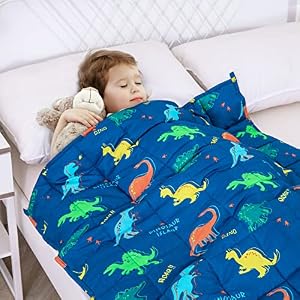
Finally, providing sensory enhancements in general routines can address sensory needs on a regular basis. For example, using a weighted blanket provides pressure stimulation through proprioceptive input and can provide a sense of grounding as kids prepare for sleep. This integrates sensory stimulation into a daily routine.
When choosing a weighted blanket, it’s important to find a quality, safety-tested product that is appropriate for the age and developmental level of your child. Dreamland Baby offers weighted blankets and sleep sacks even for younger children and was developed by a mom trying to address her own child’s sleep needs.
As a parent, finding creative solutions and advocating for your child will help pave the way for them. Once you determine that you have a sensory-seeking child, you can build in ways for them to experience life to the fullest.
References:
https://www.cdc.gov/healthyyouth/health_and_academics/pdf/pape_executive_summary.pdf
https://www.ncbi.nlm.nih.gov/pmc/articles/PMC7823442
https://pubmed.ncbi.nlm.nih.gov/25022743
https://dreamlandbabyco.com/blogs/news/weighted-blankets-for-kids-with-anxiety
Trending Products

SENSORY4U Weighted Lap Pad for Kids...

HunnmingRe Weighted Lap Blanket 7lb...
Kivik Weighted Blanket 3lbs, Blue D...

anfie Weighted Blanket Kids (36R...

Kidaddle 5lb Weighted Blanket (Grey...

HOSUKKO Weighted Blanket – 5 ...

yescool Weighted Blanket 5 Pounds C...

5lb Child’s Weighted Blanket ...

MAXTID Weighted Blanket for Kids 5l...