Learn how venues can make their facilities more inclusive and accommodating for people with autism.
Community participation is an important part of everyone’s lives and can impact their quality of life in a positive way. To address common barriers that may prevent autistic people from fully participating in community events, four occupational therapy doctoral students partnered with five autistic clients from a digital technology training institute to conduct autism accessibility audits at various places in their community.
These autism accessibility audits show the strengths of environments and the factors in the environments that could be improved to make them as autism friendly as possible. Environmental modifications resulting from audits have had no negative impacts on anyone’s experience at these places, and as a result, audits not only benefit autistic visitors but can also create a more hospitable environment for the general population.
Audits focus on sensory, communication, and social barriers to community participation. The sensory component focuses on lighting, sounds, and smells. The communication component focuses on the clarity and usefulness of signs and other visuals, opportunities to communicate with employees and others, and the accessibility of other forms of communication. The social component assesses levels of crowding and safety factors.
Detailed feedback by autistic auditors
Before an audit visit, the team reviews venue social media posts and websites for information about hours, crowded times, and special events. An individualized Google Form survey is created for each community venue, then loaded into the team’s Smartphones. The Google form has 20-30 different neutral questions or statements.
Examples of neutral statements are “Lighting inside is okay” and “Exits and entrances are clearly labeled.” Auditors respond that they either highly agree, agree, disagree, or highly disagree with each statement, and elaborate on their responses in a comment section. Team members complete these walk-throughs independently while responding to Google Form prompts on their phones. After the walk-through, the team spends 30 minutes discussing observations and going through Google survey results, emphasizing sensory, communication, and social factors.
Through group discussions, autistic auditors consistently give feedback regarding their favorite parts of the environment, factors they didn’t like, what they would like to change, what can’t be changed but requires more preparation, and parts of the environment that stood out to them. Detailed feedback provided by autistic auditors is helpful in making reports more authentic, especially when their actual words become part of our reporting.
One thing our audit team has learned along the way is that it is important to stay as objective as possible when observing environmental factors and completing the audit report. We find Smartphone apps are the most convenient option to provide objective measurements of our observations. Our favorite apps include a decibel reader to measure sound levels of different zones in an environment, a light meter to measure light intensity in different zones, and a thermometer to measure temperatures in different zones.
Reports delivering useful information
To make this information useful to others, in our reports, we relate factors such as sound levels in decibels to common aspects of everyday life. For example, “The coffee machine sound level is 80 dB, which is as loud as a busy downtown street.”
Two types of reports are developed from the data obtained in autism accessibility audits. One is for the community venue to inform them on what was found regarding social communication and social factors from the walk-through, and to make suggestions about environmental modifications they can partake in to establish a more neuro-friendly environment.
The other report is written for autistic community members, when the content is primarily generated by the autistic auditors and formatted by occupational therapy students. It contains an overview of the community venue, “good to know” factors about their environment, and ways to prepare before visiting. The goal of these reports is to lessen people’s worries about going to a new location and to increase their staying power and enjoyment of the community experience once they are there.
The importance of collaborating with autistic auditors
So, what have we learned from this experience? First, we believe collaboration between occupational therapy students and autistic auditors has been an essential component of our work, because neurotypicals may perceive the environment in different ways than their autistic counterparts. For our team, every community venue has been unique and varied in strengths and weaknesses.
We have visited both big-box shopping franchises and smaller, individually owned and operated businesses such as local coffee shops. Common themes came about after discussing reasons autistic auditors enjoyed community venues. Popular features include having plenty of space to move around, the use of well-designed signage, an organized navigation route, and a quiet environment.
On the other hand, commonalities for reasons they don’t enjoy a community venue include the presence of multiple sources of noise, uneven lighting, lack of signs, high crowding levels, and a lack of pictures for menus in food and coffee service areas. We have also learned that our autistic team members feel more comfortable when going to a new place if they have time to prepare, using their own strategies for community participation.
Autism accessibility planning
Many community venues have similar needs when it comes to making their places autism, and we consistently offer similar small yet effective recommendations. Acoustical tiles can be placed on walls or underneath seats to lower sound levels. Noise-reducing headphones can be placed at venue entrances as an option for those who have sound sensitivities.
Small, partitioned areas and noise-absorbing plants can offer a sensory, calm space. Signage can alert individuals to zones with strong smells or temperatures. Information on times for crowding and business can help visitors decide when their best time to attend is. Lastly, a whiteboard or other low-tech communication support can provide visitors with an easy and inexpensive solution for some communication challenges.
As a next step in our autism accessibility planning, we intend to continue and expand our partnerships with autistic auditing teams, continue to get their voices out in the community, and make changes for the better. We believe advocating for the autism community helps address their participation needs, educates community venues about autism, and that partnering with both community venues and autistic community members creates more consistent community planning. There are many simple ways communities can be more inclusive places, and autism accessibility audits are a great way to contribute to that process.
Acknowledgments: The authors wish to thank the Texas Higher Education Coordinating Board for their support.
Trending Products

SENSORY4U Weighted Lap Pad for Kids...

HunnmingRe Weighted Lap Blanket 7lb...
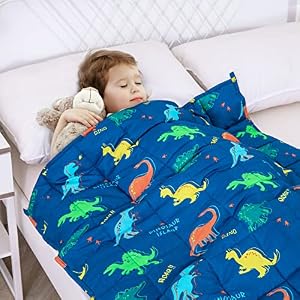
Kivik Weighted Blanket 3lbs, Blue D...

anfie Weighted Blanket Kids (36R...

Kidaddle 5lb Weighted Blanket (Grey...

HOSUKKO Weighted Blanket – 5 ...

yescool Weighted Blanket 5 Pounds C...

5lb Child’s Weighted Blanket ...

MAXTID Weighted Blanket for Kids 5l...