
Are you looking for some tools and support for communicating with your nonverbal child? Look no further.
Augmentative Adaptive Communication
When interacting with a nonverbal child with autism, most communication tends to be adult-initiated. An adult provides the child with directions, instructions, and organized choices. The child responds to the adult with help from Augmentative Adapted Communication (AAC) Devices.
These devices range from a simple choice of two pictures on paper to highly complicated, picture-based, voice-output communication devices with thousands of vocabulary words and sentence structure components and fully customizable programming. Non-tech and low-tech picture-based products are great tools for educational programs, especially when such programs are introducing pictures to children for the very first time or using them for targeted lesson planning.
Personal communicative power
Beyond structured, educational lessons it’s important to consider how to provide children the power to independently initiate and express their communication interests. Here is where a personal Communication AAC device can be useful.
Personal communication devices are intended to become the child’s voice, or primary means of expressing themselves. The child has free access to this device and it is personalized to each child’s particular vocabulary needs. When considering a device that is best for your child, I recommend moving directly to picture-based, computerized, voice-output device applications or communication apps.
In today’s age there is an abundance of easy-to-use and relatively affordable computer-based products available. I found introducing nonverbal autistic children to communication apps an extremely successful strategy. Children are usually comfortable with using electronic devices for entertainment and transition well to using the communication apps. Apps that can be used on tablets, hand-held devices, and phones are wonderful. Just be sure to get a sturdy, impact-resistant case!
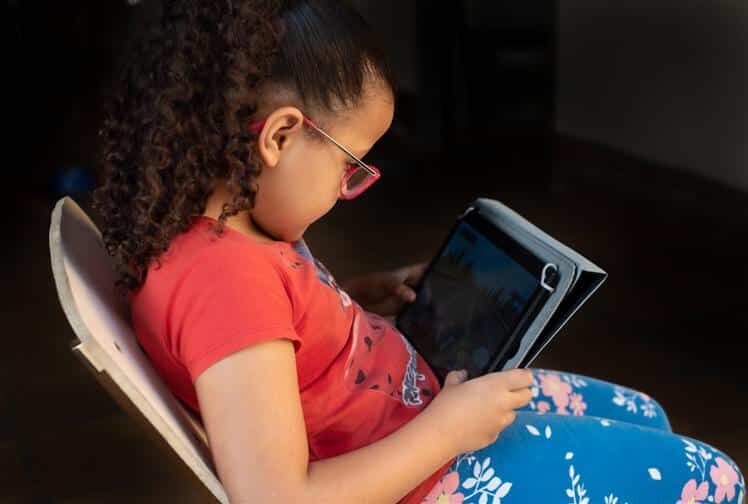
“What about my nonverbal, cognitive-, and behaviorally-challenged child?” you ask. Well, YES! Even for your child. I have used communication apps with some of the most cognitively and behaviorally challenged autistic children in the county, and they worked fabulously!
Choosing an app
Comparing personal communication AAC devices could be likened to comparing vehicles. Now, there is driving a luxury SUV, a nice four-door sedan, and a moped. All provide transportation but all are not equal.
The luxury SUV is so very nice, but really, who can afford it, or even handle driving it with its large size and high-tech gadgets? Of course, if your job is to provide transportation to a wealthy executive’s family, a luxury SUV may be perfect.
Most of us, though, get high-quality transportation out of a nice four-door sedan. There is better speed, a variety of accommodations, and increased comfort in the sedan compared to a moped, without the overabundance of the luxury SUV. Communication apps follow the same pattern.
There are several apps available that range from very simple systems with limited pre-programmed pages, to customizable systems with the highest levels of current tech, including pictures, words, sound, and word/sentence prediction.
The most expensive of programs, such as Dynavox, are exceptional and out-matched by the sheer expanse of their functions. Unfortunately, the average nonverbal child with autism will not benefit from the luxury AAC. Just like the luxury SUV, this AAC comes with more tech, a much higher price tag, highly complicated programming expertise needs, and too many functions to manage easily.
Simple and easy-to-program options are the least expensive and the easiest to put in place. When considering a personal communication device, the restrictions of a very simple and limited app will produce unrealized and stunted communication opportunities. I encourage you to think slightly bigger and with a longer view.
Most self-initiated communication from children with autism lies in identifying objects and expressing wants and interests in these items. This level of communication seems minimal, so why not stay with simple devices? Even though the child is mostly communicating about requests for items, there are hundreds of items in a child’s environment that could be requested. A limited system that does not provide for growth and customization will pigeon-hole the child’s vocabulary to a very small, confined set of words.
In my experience, children with autism who expend a lot of energy trying to get what they want through reaching, grasping, hand-leading, whining, crying, and tantrum behaviors have a good idea of exactly what they would like. It is simply the inability to specify regular chips over crinkle chips that proves frustrating.
Cognitively-challenged and nonverbal children are often thought to be unaware of the distinction between different brands or similar flavors of common snacks. Experience tells me, they know very well if you are serving the name brand or the generic brand of their favorite cookie.
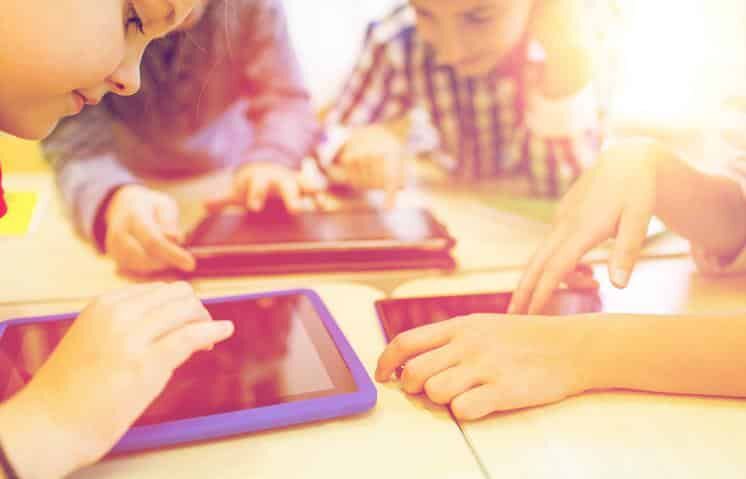
They may have been conditioned to accept what they are given, but if provided an opportunity to choose, they will indeed choose their favorite flavor consistently. There is no better experience than witnessing children giggle and smile when they first realize they can ask for exactly what they want. It brings joy to my heart remembering the scene repeated over and over again by each student newly appreciating this super power. If you build it, they will communicate!
I recommend investing in a good, middle-of-the-road app such as Proloquo2go or similarly developed programs. Like the sedan, this level app gives us a great variety of accommodations. Apps with a ton of pre-packaged vocabulary pages (that also allow custom real-life photos, voice/audio recordings, page organization, sentence length options, and more) will provide the adaptations each child needs. These apps are able to start small and grow big over time.
These options allow the family and education staff to provide vocabulary for all the items in the child’s environment. Each and every farm animal with their slightly different markings can be uploaded into the program for your particularly detail-oriented child.
Even that latest fast food gimmick toy can easily be added to the list of pictured items available for your child to request. This will quickly add up to a lot of vocabulary, and adults will be shocked by how much their previously uncommunicative and/or difficult child has to say. The child will be able to ask not just for tennis shoes, but the blue, light-up pair!
On a personal note
Besides objects, I love to put pictures of people into the program and then teach the child to ask for or call out the name of the person he or she wants. Teaching children to call people by name was a particular interest of mine and we practiced this in many of our little lessons.
One year at school, I had added silhouette pictures of a man and woman to all the communication devices on our people page. I titled the pictures “Excuse me, Sir”, and “Excuse me, Miss.” I hoped this would provide the students a generic choice when we had substitute staff working. I really did not expect much success with the silhouettes but figured I might be able to teach one or two of my most capable communicators to use the pictures with a substitute staff of which they did not have an exact picture.
To my surprise one day one of my most challenged communicators independently and spontaneously used the correct male silhouette picture with a substitute without any previous training! All of a sudden, I heard: “Excuse me sir, I want the computer please”. I looked up to see my little guy staring right up at the substitute staff who was leaning on the chair for the computer. I was flabbergasted!
Trending Products

SENSORY4U Weighted Lap Pad for Kids...

HunnmingRe Weighted Lap Blanket 7lb...
Kivik Weighted Blanket 3lbs, Blue D...

anfie Weighted Blanket Kids (36R...

Kidaddle 5lb Weighted Blanket (Grey...

HOSUKKO Weighted Blanket – 5 ...

yescool Weighted Blanket 5 Pounds C...

5lb Child’s Weighted Blanket ...

MAXTID Weighted Blanket for Kids 5l...